

I love dressing for summer, but I know it’s not everyone’s favourite season.
As soon as the temperatures rise, getting dressed suddenly feels much harder. Clothes cling in all the wrong places, layers become impossible, and somehow the outfit you loved a month ago now feels completely unbearable.
Growing up in southern Spain (Canary Islands) , where summers are long and properly hot, I’ve learnt what my body needs when the temperature reaches the point where you don’t really want to wear clothes at all. After many summers of trial and error (and a fair amount of sweating), I’ve learnt which fabrics, outfits and styling tricks genuinely make a difference.
So whether you’re surviving this week’s heatwave or simply trying to make summer dressing a little easier, here are the things I always come back to.
1. Build the outfit around comfort
You know that this is always priority number one in the Nothing to Wear Club: comfort is synonymous with feeling good in your clothes.
When it’s boiling hot, uncomfortable clothes become even more uncomfortable.
This isn’t the day for anything that pinches, clings, needs constant adjusting or only works if you’re standing perfectly still.
Think breathable fabrics, relaxed silhouettes, comfortable shoes and pieces that let you completely forget about your clothes.
2. It’s All About the Fabrics
If comfort is the foundation of a good summer outfit, fabric is what makes or breaks it.
I am that annoying person who always checks the fabric label before even looking at the price. Because understanding what your clothes are made from completely changes the way you shop. It makes you slower, pickier, and much less likely to buy something just because it looks good on the hanger.
The same dress can feel completely different depending on what it’s made from. Some fabrics allow air to circulate and keep you cool, while others can turn you into a stinky human greenhouse.
Growing up in southern Spain has definitely made me more selective about the fabrics I wear in summer. But living in the UK has taught me a different set of lessons altogether.
Summer in Gran Canaria is built around the heat. If it gets unbearable, you escape to the beach, have a late swim or simply spend less time outdoors during the hottest part of the day.
Summer in London is a different story. You still have to commute, sit on the Tube, go to work, run errands and survive the entire day in the same outfit, often moving between scorching streets and poorly air-conditioned offices.
Living between southern Spain and London has taught me that summer dressing isn't about where you are, it's about how your clothes make you feel after a full day of living in them. These are the fabrics I reach for time and time again, both in my own wardrobe and when I'm shopping with clients.
Linen
The queen of summer fabrics. Linen is breathable, lightweight and dries quickly, making it perfect for hot, humid weather. Yes, it wrinkles, but personally I think that’s part of its charm.
The best linen1 only gets better with age, becoming softer and more comfortable every summer.
Best for: Dresses, shirts, wide-leg trousers, tailoring and matching sets.
Cotton
Cotton is probably the hardest-working fabric in my summer wardrobe. It doesn’t get the same attention as linen, but it’s breathable, easy to care for and endlessly versatile. I love cotton gauze for soft, floaty dresses that feel cool against the skin, while cotton poplin and voile are my go-to fabrics for shirts and blouses that still look polished without feeling heavy.
Best for: T-shirts, shirts, dresses, skirts and everyday basics.
Hemp
Hemp deserves far more attention than it gets. It has a similar feel to linen but is often a little softer, incredibly durable and becomes nicer the more you wear and wash it. It’s also naturally breathable and moisture-wicking.
Best for: Shirts, relaxed trousers, dresses and lightweight jackets.
Ramie
A bit of a hidden gem. Ramie is another natural fibre that feels similar to linen but tends to hold its shape slightly better. It has a crisp finish, breathes beautifully and is surprisingly hard-wearing.
Best for: Shirts, dresses and tailored separates.
Lyocell (TENCEL™)
One of my favourite modern fabrics. Lyocell is made from wood pulp and has a beautiful drape that almost feels like silk. It’s soft, breathable and much cooler than many synthetic fabrics.
Best for: Slip skirts, dresses, blouses and relaxed trousers.
Bamboo
Bamboo fabrics are wonderfully soft against the skin and naturally breathable. They’re particularly nice if you prefer clothes with a bit more drape rather than structured cotton or linen.
Best for: Jersey tops, dresses, loungewear and lightweight basics.
Silk
People often forget about silk in summer, but a lightweight silk blouse or dress can feel wonderfully cool. It regulates temperature surprisingly well and instantly elevates even the simplest outfit.
Best for: Blouses, skirts, dresses and evening outfits.
Summer Wool
Yes, wool.
Summer or tropical wool is woven differently from winter wool, making it lightweight, breathable and ideal for tailoring. If you need to wear a suit or structured trousers to work, this is one of the best fabrics you can choose.
You won't always find it labelled as tropical wool, so keep an eye out for lightweight wool suiting or finely woven 100% wool blazers and trousers. One other thing I'd mention (because it's genuinely useful): avoid wool blends with lots of polyester. A 100% lightweight wool blazer will often feel cooler than a cheaper wool-polyester blend, especially if you are commuting in the heat.
Best for: Blazers, trousers, waistcoats and workwear.
Linen Blends
If you love the look of linen but aren’t keen on the creases, linen blended with cotton, Lyocell or viscose can be a brilliant compromise. You still get much of the breathability with a little more softness and structure.
Best for: Everyday dresses, trousers, skirts and shirts.
My Summer Fabric Cheat Sheet
For dresses: Linen, cotton, Lyocell and lightweight silk.
For shirts: Cotton poplin, linen, hemp and ramie.
For skirts and trousers: Linen blends, Lyocell, cotton and hemp.
For workwear and tailoring: Cold wool and linen blends.
For lightweight knitwear: Cotton, fine merino and linen blends.

3. Summer dressing isn't one-size-fits-all
One thing that really frustrates me about summer style advice is that it assumes we’re all wandering around in a strappy linen dress and sandals with absolutely no responsibilities. But life is a bit more complicated than that.
Maybe you need sleeves. Maybe your office has a dress code. Maybe you don’t wear open-toe shoes. Maybe you need a supportive bra. None of these things mean you have to sacrifice style; they just mean your version of summer dressing might look a little different.
Here are some of the most common situations I come across, along with the solutions I recommend. And if your particular summer dressing dilemma isn’t here, you know where to find me.

If You Prefer to Cover Your Arms
One of the biggest misconceptions about dressing for hot weather is that less fabric automatically means you’ll feel cooler. In reality, a lightweight long sleeve can often feel far more comfortable than having your skin directly exposed to the sun.
Whether it’s for sun protection, modesty, comfort, or simply because you prefer your arms covered, there are plenty of ways to stay cool without reaching for a heavy jacket.
The secret is choosing fabrics that allow air to circulate and silhouettes that create space between the fabric and your skin.
Hey Mrs. Solomon on Style does this incredibly well. Even though she lives in Miami, where the heat is no joke, she somehow manages to create outfits with interesting layers, textures and details that still feel appropriate for the weather.
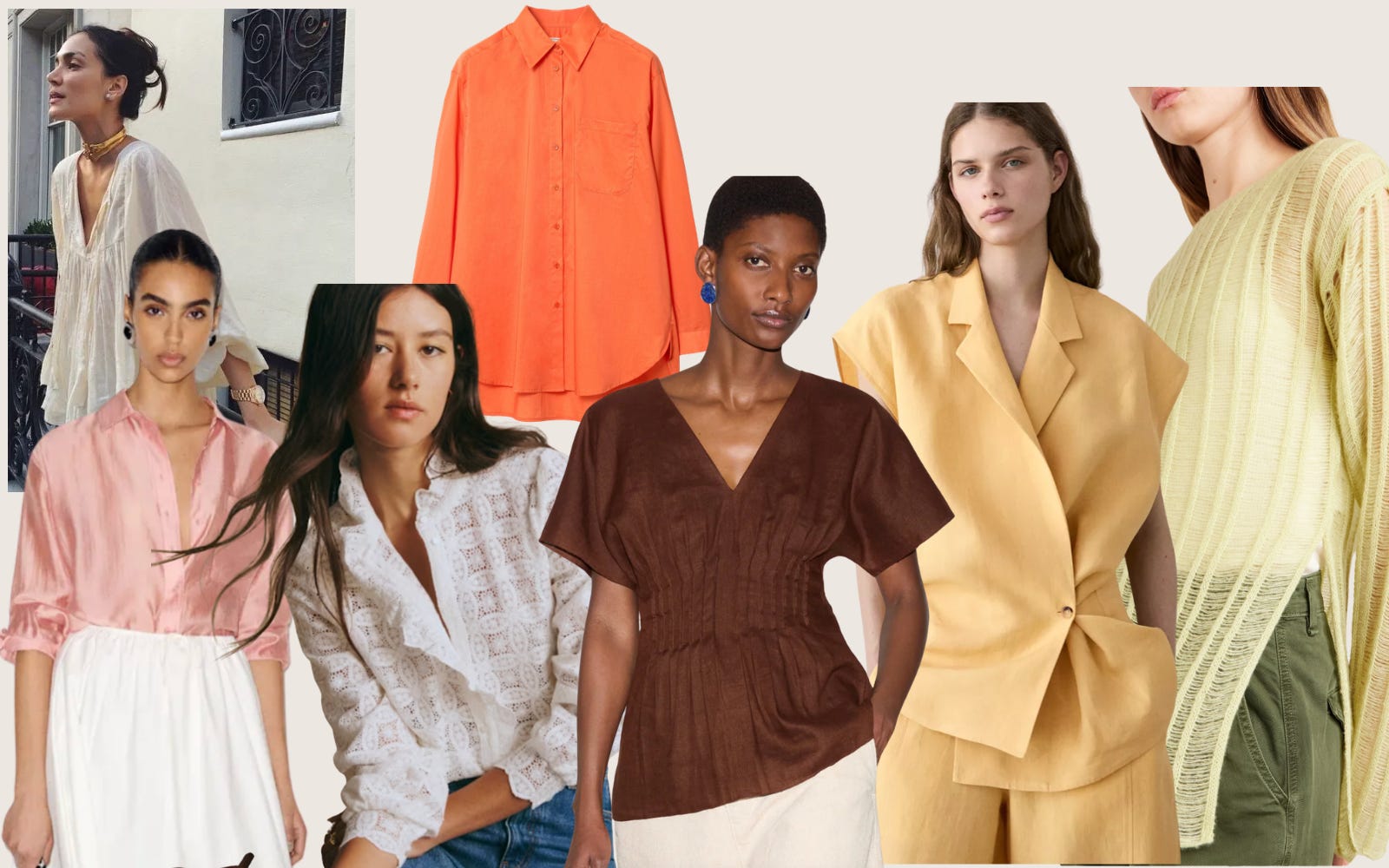
Instead of fitted sleeves, look for:
Oversized linen or cotton shirts. Wear them open over a vest or buttoned up with the sleeves rolled.
Cotton poplin shirts. Crisp, breathable and polished enough for work while still allowing you to stay cool.
Wide or balloon sleeves. They create airflow around the arms instead of trapping heat like fitted sleeves do.
Sheersucker, crochet and open-weave fabrics. Think broderie anglaise, guipure lace or any fabric with beautiful cutwork or embroidery. They let the breeze in while still giving you the coverage you want.
Kimono-style jackets or lightweight overshirts. Perfect for throwing over dresses or sleeveless tops without feeling too warm.
Fine cotton or linen knitwear. Ideal for air-conditioned offices or evenings when you want a little extra coverage without overheating.
If You Need a Proper Bra
Can we collectively stop pretending every summer outfit works with a sticky bra or one of those poorly constructed strapless bras that needs pulling up every five seconds?
If you need support, don’t fight against it. Choose clothes that work with your everyday underwear.
Look for:
Wide shoulder straps that comfortably hide your bra straps.
Square, scoop or higher necklines that are naturally bra-friendly.
Tops with built-in bras, this is my favourite solution!
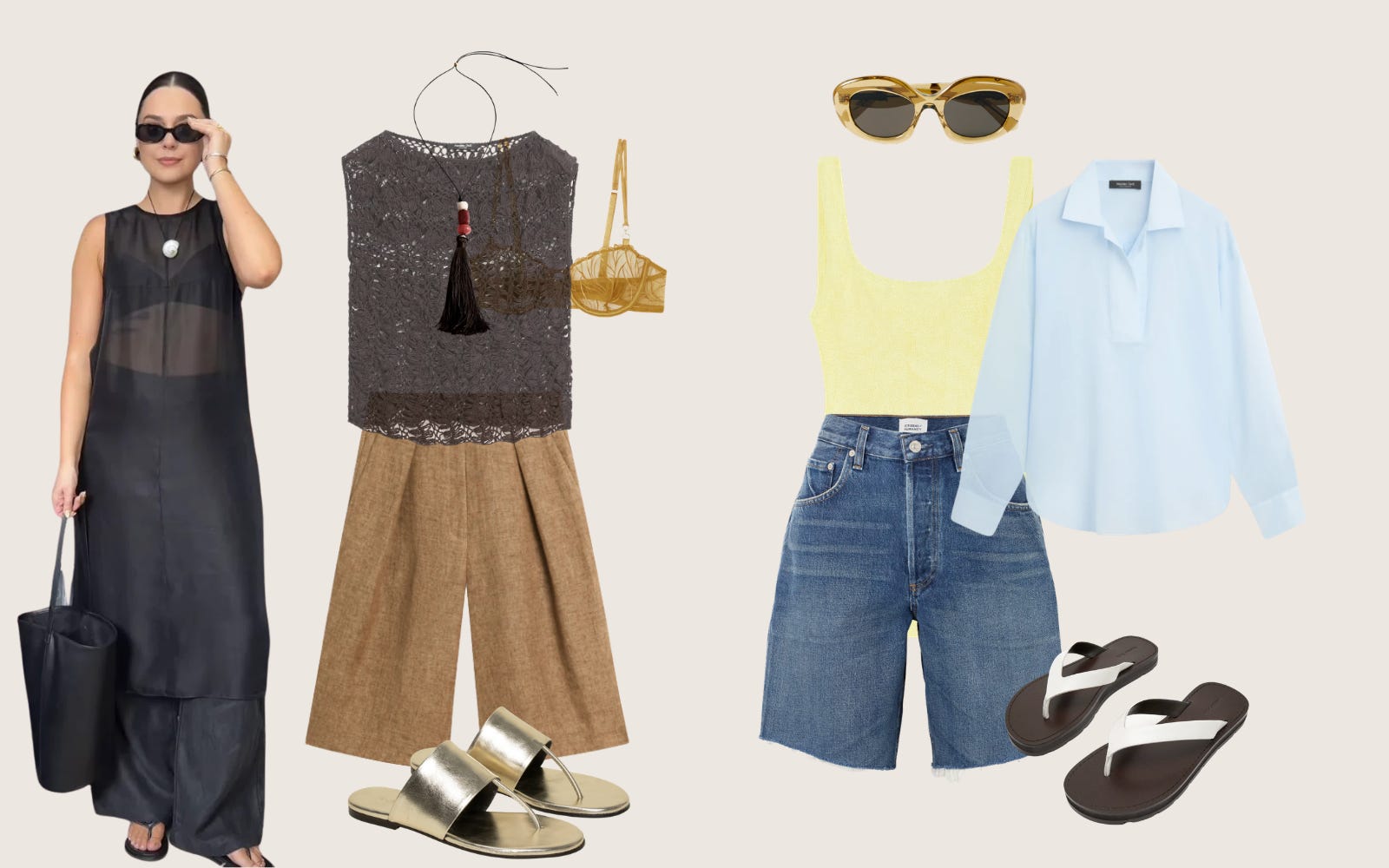
And here’s another little styling trick: your bra doesn’t always have to disappear.
A beautiful lace bra under a slightly sheer shirt, a black cotton bra under a black linen tank, or even a colourful bra peeking through a white broderie anglaise blouse can look completely intentional. Rather than trying to hide it at all costs, think of it as another styling element within your outfit.
Personally, I love the look of a simple non wired black cotton bra underneath a sheer blouse. It adds a subtle, slightly sexy edge without feeling overdone.
The same goes for swimwear. A simple bikini top or a cool swimsuit can double as a top under an oversized linen shirt, an open crochet knit or a sheer blouse—even if you are nowhere near the beach. It’s an effortless way to stay cool while adding another layer of texture and colour to your outfit.

If You Need to Dress for the Office
Summer dressing becomes a little trickier when you still have to commute, spend eight hours in an office and still look vaguely professional. While every workplace has its own dress code, you can absolutely stay cool without sacrificing polish.
The biggest difference comes down to fabric. Swap heavy tailoring for breathable materials like linen, cotton poplin, Lyocell or lightweight wool, and you’ll notice a huge difference.
Summer workwear doesn't have to mean sacrificing colour either. Sometimes simply swapping your navy suit for olive, butter yellow or soft blue instantly makes an outfit feel more seasonal.
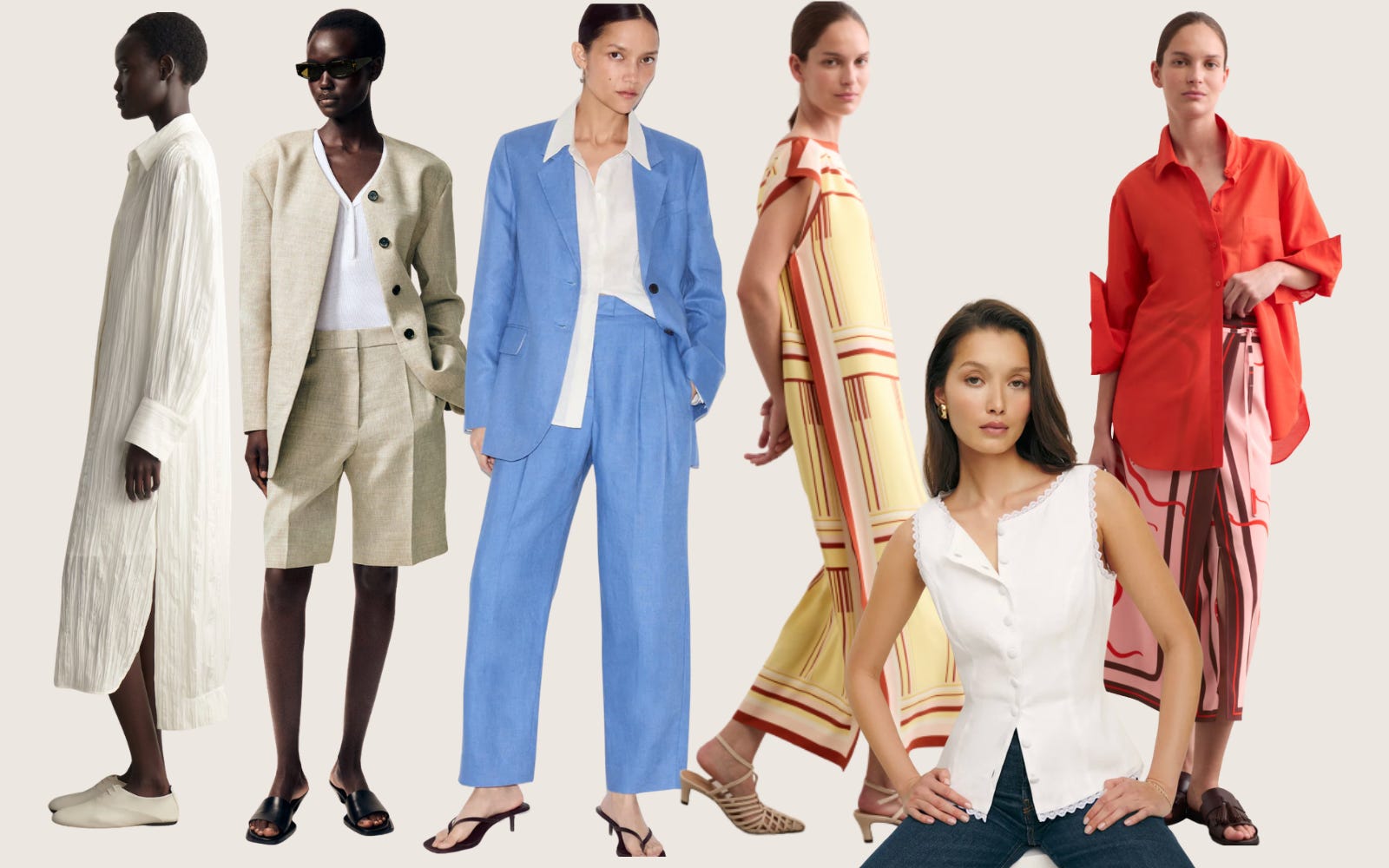
Some of my favourite office-friendly pieces are:
A colourful linen suit. Who says workwear has to be boring? A linen suit in a summery colour instantly looks polished but feels much lighter than traditional tailoring. I particularly love this one from Jigsaw (sale).
Lightweight dresses in silk or linen. They do all the hard work for you. Add a pair of loafers or ballet flats for the office, then swap to sandals after work if you fancy. I love this printed one, or this beautifully simple COS dress that’s currently on sale.
Waistcoats instead of blazers. They give you that tailored feel without adding an extra layer. Wear one with matching trousers, a floaty skirt or even bermuda shorts.
Easy midi skirts. One of the most versatile pieces in a summer work wardrobe. Pair with a crisp shirt for meetings, a simple T-shirt for more casual days, or a lightweight knit.
Tailored bermuda shorts. If your office dress code allows them, they are one of the smartest alternatives to trousers. Add a blazer, waistcoat or oversized shirt and they instantly feel polished rather than beachy.
And if your office doesn’t allow open-toe shoes, don’t worry, summer footwear doesn’t begin and end with sandals.
Some of my favourites are:
Woven leather flats. A great alternative to sandals. The woven leather keeps them breathable while still looking polished enough for the office. Sézane does some beautiful pairs like these or these.
Fisherman sandals. They offer more coverage than traditional sandals while still allowing plenty of airflow, and they look just as good with tailored trousers as they do with midi dresses or bermuda shorts.
Loafers. A classic for a reason. If you’re looking to lighten up your summer workwear, swap your black loafers for a white, cream or tan pair. They instantly make an outfit feel fresher without compromising on comfort.
After years of dressing through summers in southern Spain and London, one thing hasn’t changed: I always choose comfort first.
Because when you feel comfortable, you feel more like yourself—and that’s what great style is really about.
If you’d like some help making your wardrobe work harder this summer, let’s chat!
Love,
Noelia x
Sales Edit
Before you buy anything, have a look at my Sales Edit on Shopmy. I've done the scrolling for you and picked out the designer pieces under £500 that I genuinely think are worth considering, along with some brilliant high-street finds. I update it regularly whenever I spot something good.
How can you tell if linen is good quality?
It should feel substantial without being heavy.
It should soften in your hands while still holding its shape.
Hold it up to the light: it shouldn’t be excessively sheer unless it’s designed to be.
The weave should look even and tightly woven.
Give it a little scrunch. It will crease (that’s linen!), but it shouldn’t look like you’ve crushed a paper bag.
Finally, check the finishing. Beautiful linen paired with poor stitching or flimsy buttons will never feel like a truly good piece.
Thank you for including us that MUST wear a bra. I find all the dresses with skinny straps so infuriating as I really cant go out without one. I am embracing intentionally letting my bra show and I really like what it brings to an outfit sometimes
I loved this. ❤️ It made me think how often summer style advice assumes we're all living the same life, when actually so many women are dressing for changing bodies, commutes, work, toddlers, hot flushes and breastfeeding all at once. This piece really captured that so well. Comfort isn't giving up on style, it's what lets you actually enjoy your life.