


At the end of Part 3, we talked about translating your fantasy pieces — about allowing your wardrobe to absorb what excites you instead of keeping those pieces separate, waiting for the “right” version of you to justify them. And as I was thinking about this next part, I kept coming back to something I wrote recently and resonated with so many of you: style is not a reward for shrinking.
Not shrinking your body. Not shrinking your personality. Not shrinking your visibility or ambition. And yet, without noticing, we sometimes treat refinement like something we have to earn. We tell ourselves we will upgrade our wardrobe when life settles down, when we feel more confident, when we lose the weight, when we are more certain about who we are becoming. As if clarity is a destination we arrive at fully formed.
But real life does not work like that. It shifts quietly and constantly. Your routines evolve, your priorities change, your tolerance for discomfort lowers, your confidence grows in one area and wobbles in another. And in the middle of all of that movement, your wardrobe can begin to feel slightly out of step — not broken, not wrong, just subtly misaligned with who you are now.
This is the part of the Style System that lives in that space.
Not starting over. Not blowing everything up. Not punishing yourself for having changed. Just learning how to let your wardrobe grow with you in a way that feels steady and intentional.
Because personal style should not require reinvention every season. It should evolve alongside your real life, not trail behind it or sit in opposition to it. And the only way that happens is through maintenance — not the dramatic kind, but the quiet, strategic kind that keeps momentum without creating new disconnects.
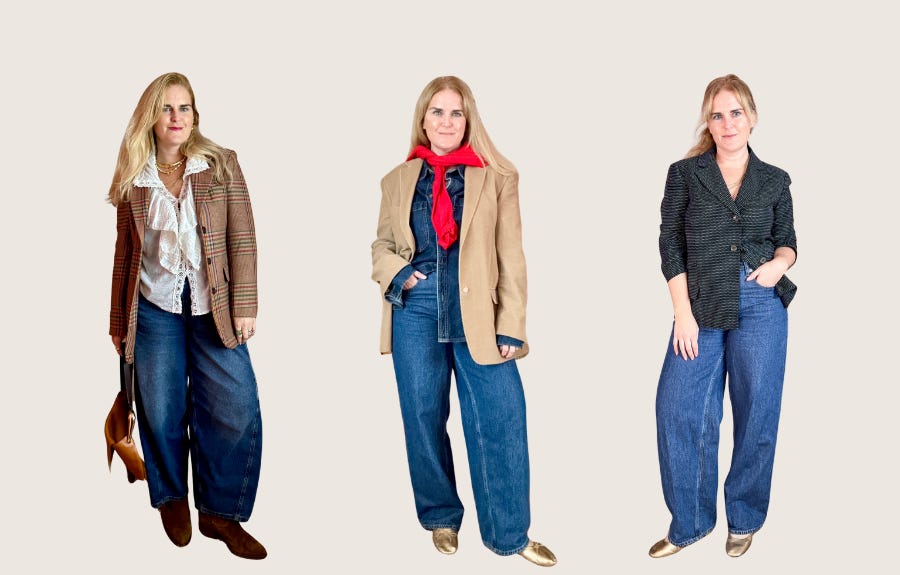
When Things Start to Feel Slightly Off
Most wardrobes do not collapse overnight. They drift.
The pieces that once felt grounding start to feel predictable. Silhouettes that made you feel confident begin to feel slightly rigid. The fantasy items you were excited to integrate no longer spark in quite the same way — or you find yourself drawn to a different kind of energy altogether.
I went through this myself. For years, my summer wardrobe was full of printed dresses and colourful outfits — expressive and playful. Then winter would arrive and everything shifted to muted, pared-back layers. It felt like I had two different personalities living in the same closet.
That is not inherently wrong. You do not need to dress in one consistent mood all year.
But I noticed there was no real conversation between the two. Summer felt vibrant. Winter felt restrained. They did not reflect the same version of me.
So instead of overhauling everything, I adjusted. I added grounding neutrals to my summer wardrobe so the colour felt intentional. I introduced more texture and colour into winter so it still felt expressive.
The wardrobe was not broken. It was evolving.
Revisit Your Core and Fantasy Pieces
When something feels slightly off, the instinct is to look outward — new inspiration, new trends, new pieces. But recalibration starts by looking inward.
Your core pieces were meant to support a specific season of your life. If you have evolved, they may need to evolve too.
This does not mean they were wrong.
It simply means you are not static. You are a person, not a shoe — and people change.
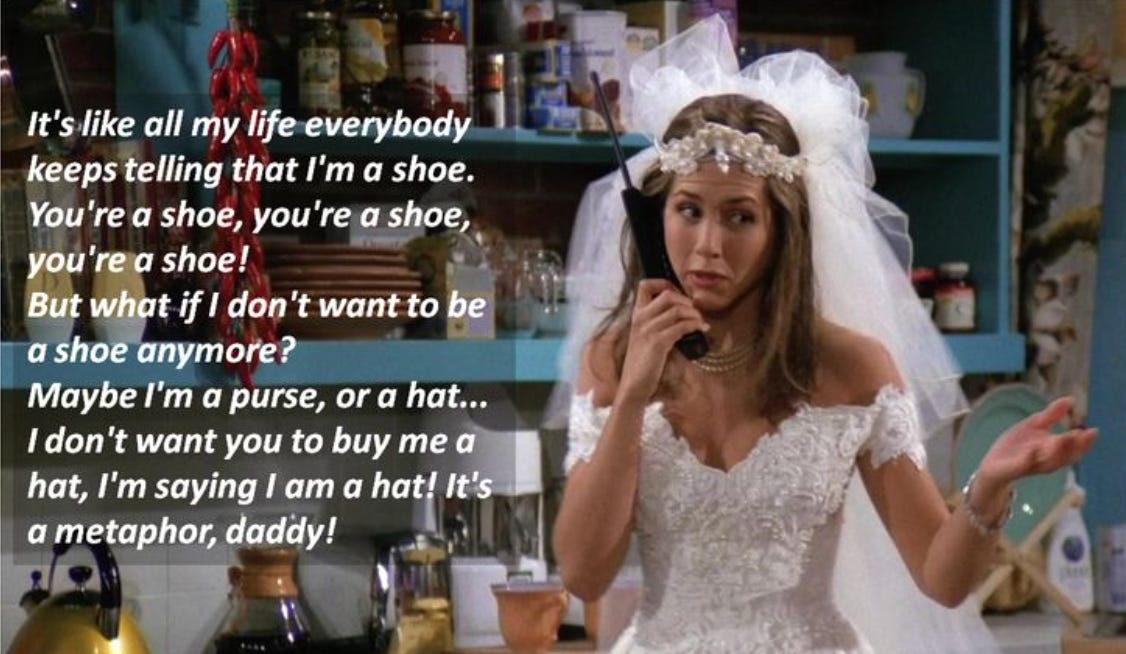
Maybe the trousers that once felt powerful now feel predictable. Maybe the oversized layers that once felt safe now feel like hiding — and to hell with hiding! Maybe the structured blazer that anchored everything no longer fits your current rhythm.
At the same time, your fantasy pieces — or what they represent — may have shifted. You might no longer crave sparkle; you might crave polish. Or fluidity. Or quiet authority.
When a wardrobe feels misaligned, it is often because your core and your cravings are no longer in conversation.
The solution is not to replace everything.
It is to adjust your foundations so they support who you are now — and to refine your desires so they integrate naturally into your real life.
That is recalibration.
And this is where editing becomes a skill, not a reaction.
If this is resonating, this is where we go deeper.
In the rest of this piece, I break down how to recalibrate your wardrobe without starting from scratch, how to edit strategically instead of emotionally, and I am sharing the Wardrobe Reconnection Prompts I use with clients when things feel slightly out of alignment.
This part of The Style System is for paid subscribers.
If you want to refine your wardrobe instead of constantly resetting it, you can upgrade below.
